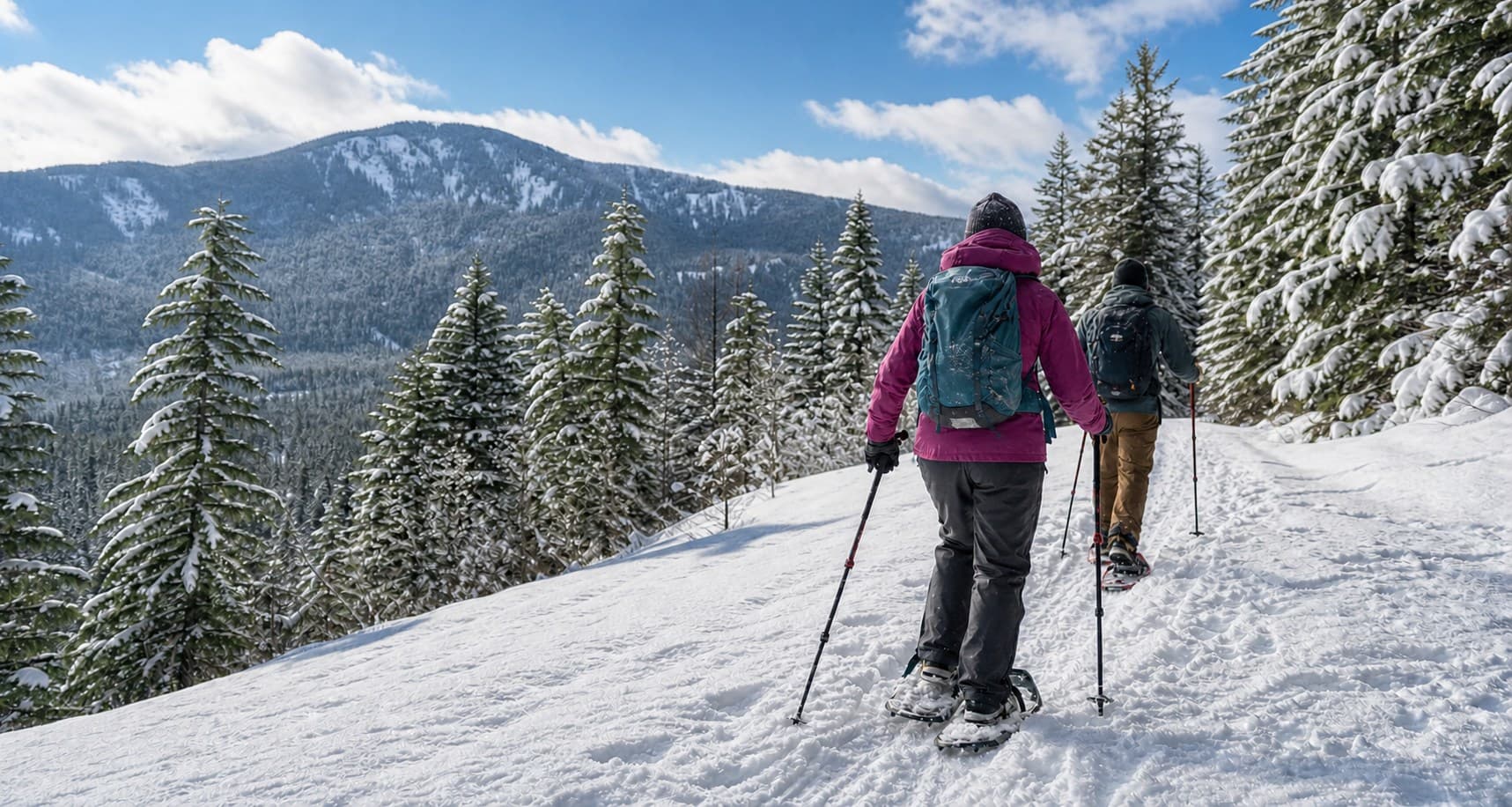
Layering and footwear
Build warmth in adjustable layers and choose footwear that matches the activity, expected temperatures, and time spent standing still.

Winter Sports equipment
Choose equipment around temperature, moisture, snow conditions, terrain, and activity level—then compare verified options by checklist need and price tier.
Winter equipment should help you stay dry and warm, provide secure footing, and leave room for changing conditions.
Build warmth in adjustable layers and choose footwear that matches the activity, expected temperatures, and time spent standing still.
Prioritize secure bindings, reliable traction, and compatible ski or snowshoe equipment before paying for lighter or more specialized materials.
Basic accessories are usually enough for short outings in managed areas. Remote or variable terrain requires a larger safety margin.
Winter Sports
93 verified direct-product links. Open the winter sports checklist →
Snowshoes selected for terrain, conditions, and loaded weight.
Classic, touring, and skate ski sets matched to groomed or mixed terrain and compatible boots.
Moisture management, insulation, and weather protection as a system.
Traction selected for the surface without overstating terrain safety.
Adjustable support with baskets appropriate to snow depth.
UV, wind, and snow-glare protection for the selected activity.
Waterproof warmth, fit, and snow traction matched to the activity and expected exposure.
Certified ski and snowboard helmets selected for secure fit and goggle compatibility.
Navigation, light, first aid, and backup warmth for delays.
The lower-cost cross-use choice for winter emergency planning and delayed-return contingencies. Ultralight/Watertight .5 Medical Kit is the budget starting point for basic first aid for short solo or two-person hikes.
Why it leads: strongest balance of documented evidence, strong category-specific assessments, and value among these verified budget options.
Best for: winter travelers building redundancy for cold, darkness, and limited cell service · basic first aid for short solo or two-person hikes
The balanced cross-use choice for winter emergency planning and delayed-return contingencies. Escape Bivvy is the standard starting point for backup warmth and shelter for an unexpected delay.
Why it leads: strongest balance of documented evidence, documented practical fit and tradeoffs, and value among these verified standard options.
Best for: winter travelers building redundancy for cold, darkness, and limited cell service · backup warmth and shelter for an unexpected delay
The higher-investment cross-use choice for winter emergency planning and delayed-return contingencies. inReach Mini 2 is the premium starting point for frequent remote travel beyond cellular coverage.
Why it leads: strongest balance of documented evidence, documented practical fit and tradeoffs, and value among these verified premium options.
Best for: winter travelers building redundancy for cold, darkness, and limited cell service · frequent remote travel beyond cellular coverage
The lower-cost cross-use choice for winter emergency planning and delayed-return contingencies. Emergency Blanket is an additional budget starting point for a compact warmth backup on short hikes.
Best for: winter travelers building redundancy for cold, darkness, and limited cell service · a compact warmth backup on short hikes
The balanced cross-use choice for winter emergency planning and delayed-return contingencies. Mountain Hiker Medical Kit is an additional standard starting point for day hikers wanting a more complete first-aid kit.
Best for: winter travelers building redundancy for cold, darkness, and limited cell service · day hikers wanting a more complete first-aid kit
The higher-investment cross-use choice for winter emergency planning and delayed-return contingencies. ResQLink 400 Personal Locator Beacon is an additional premium starting point for remote travel where a dedicated distress beacon is warranted.
Best for: winter travelers building redundancy for cold, darkness, and limited cell service · remote travel where a dedicated distress beacon is warranted
The lower-cost cross-use choice for winter emergency planning and delayed-return contingencies. TIKKINA Headlamp is an additional budget starting point for emergency backup and occasional after-dark use.
Best for: winter travelers building redundancy for cold, darkness, and limited cell service · emergency backup and occasional after-dark use
The balanced cross-use choice for winter emergency planning and delayed-return contingencies. Spot 400 Headlamp is the standard starting point for regular hiking with red mode and weather exposure.
Best for: winter travelers building redundancy for cold, darkness, and limited cell service · regular hiking with red mode and weather exposure
The higher-investment cross-use choice for winter emergency planning and delayed-return contingencies. Satellite Communicator is an additional premium option worth researching for remote trips needing satellite messaging and check-ins.
Best for: winter travelers building redundancy for cold, darkness, and limited cell service · remote trips needing satellite messaging and check-ins
Roadside equipment matched to access roads and requirements.
Next step
Choose an area and dates to connect gear with weather, stays, and the rest of your preparation.