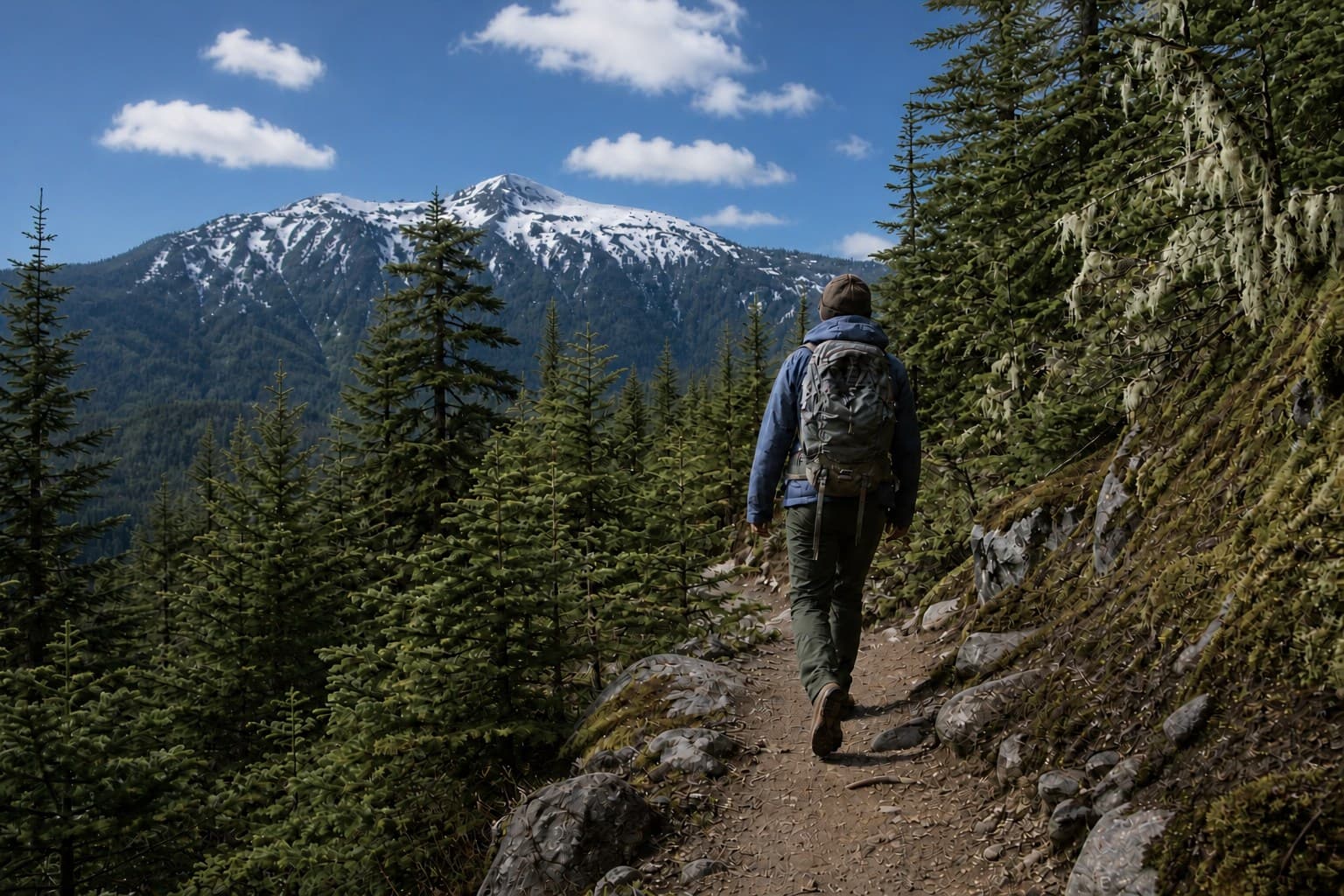
Footwear and pack fit
Choose footwear for the surface and a pack that carries the expected load comfortably without unnecessary capacity.

Hiking equipment
Choose equipment around fit, carried load, trail conditions, weather, and trip length—then compare verified options by checklist need and price tier.
The best hiking setup supports the actual route without adding avoidable weight or complexity. Start with fit, exposure, and what you must carry for the full route.
Choose footwear for the surface and a pack that carries the expected load comfortably without unnecessary capacity.
Invest in dependable layers, navigation, lighting, and emergency equipment when distance or exposure increases the consequences of a problem.
Short, maintained routes usually need fewer specialized features than remote, high-mileage, or shoulder-season trips.
Hiking
92 verified direct-product links. Open the hiking checklist →
Fit, traction, and protection matched to the route surface.
Capacity and support matched to the actual carried load.
Water carrying and treatment matched to route length and sources.
Hands-free light with enough runtime for delays.
First aid and emergency shelter for common trail problems.
Support and stability for elevation, rough footing, or long mileage.
Packable rain and insulation layers for exposure and elevation.
Gaiters, insect protection, and sun coverage matched to actual exposure.
Compact cutting and repair tools selected for useful functions, safe carry, and local rules.
Next step
Choose an area and dates to connect gear with weather, stays, and the rest of your preparation.