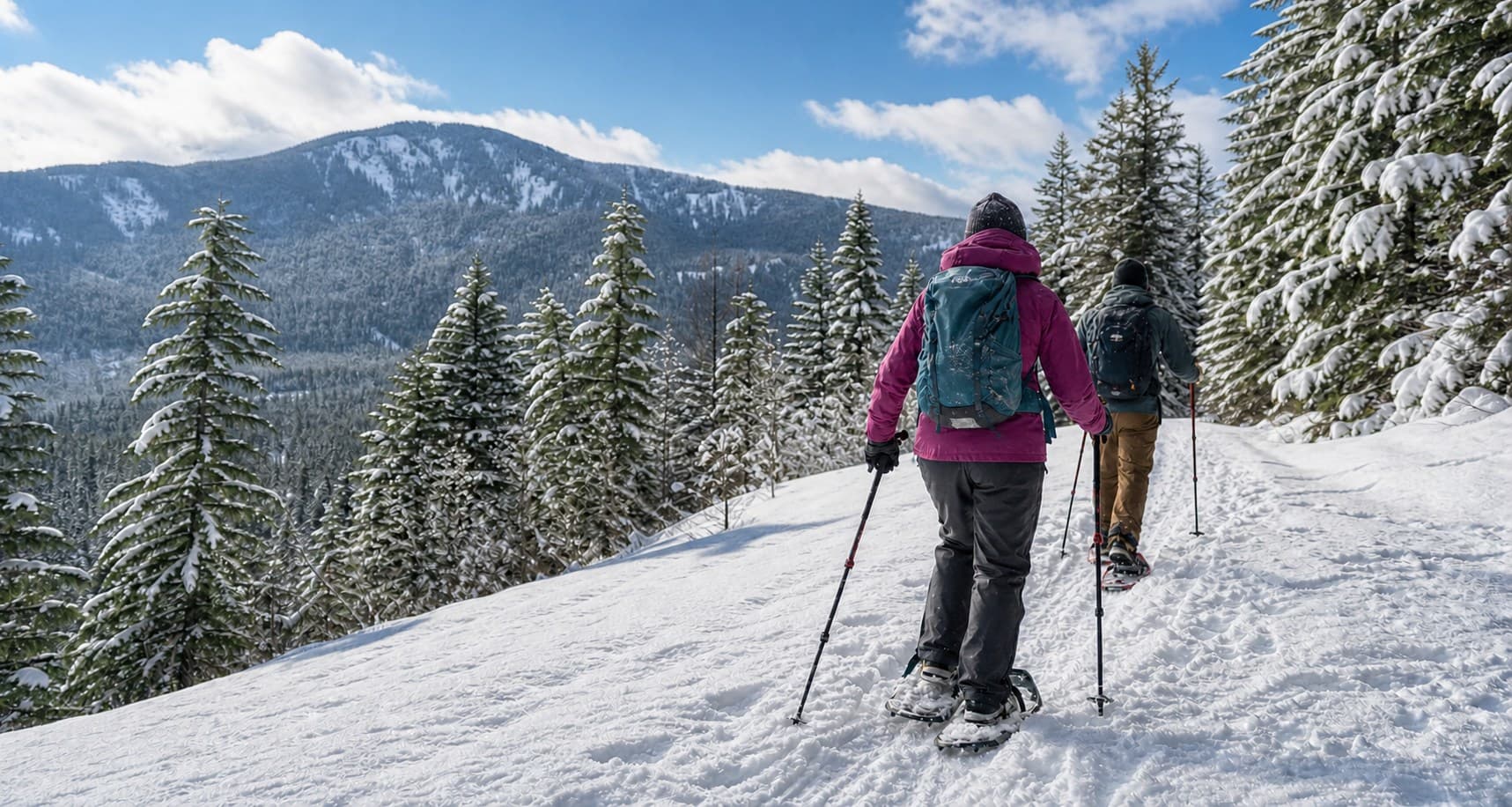
Layering and footwear
Build warmth in adjustable layers and choose footwear that matches the activity, expected temperatures, and time spent standing still.

Winter Sports equipment
Choose equipment around temperature, moisture, snow conditions, terrain, and activity level—then compare verified options by checklist need and price tier.
Winter equipment should help you stay dry and warm, provide secure footing, and leave room for changing conditions.
Build warmth in adjustable layers and choose footwear that matches the activity, expected temperatures, and time spent standing still.
Prioritize secure bindings, reliable traction, and compatible ski or snowshoe equipment before paying for lighter or more specialized materials.
Basic accessories are usually enough for short outings in managed areas. Remote or variable terrain requires a larger safety margin.
Winter Sports
93 verified direct-product links. Open the winter sports checklist →
Snowshoes selected for terrain, conditions, and loaded weight.
Classic, touring, and skate ski sets matched to groomed or mixed terrain and compatible boots.
Moisture management, insulation, and weather protection as a system.
Traction selected for the surface without overstating terrain safety.
Adjustable support with baskets appropriate to snow depth.
UV, wind, and snow-glare protection for the selected activity.
Waterproof warmth, fit, and snow traction matched to the activity and expected exposure.
Certified ski and snowboard helmets selected for secure fit and goggle compatibility.
Navigation, light, first aid, and backup warmth for delays.
Roadside equipment matched to access roads and requirements.
Next step
Choose an area and dates to connect gear with weather, stays, and the rest of your preparation.