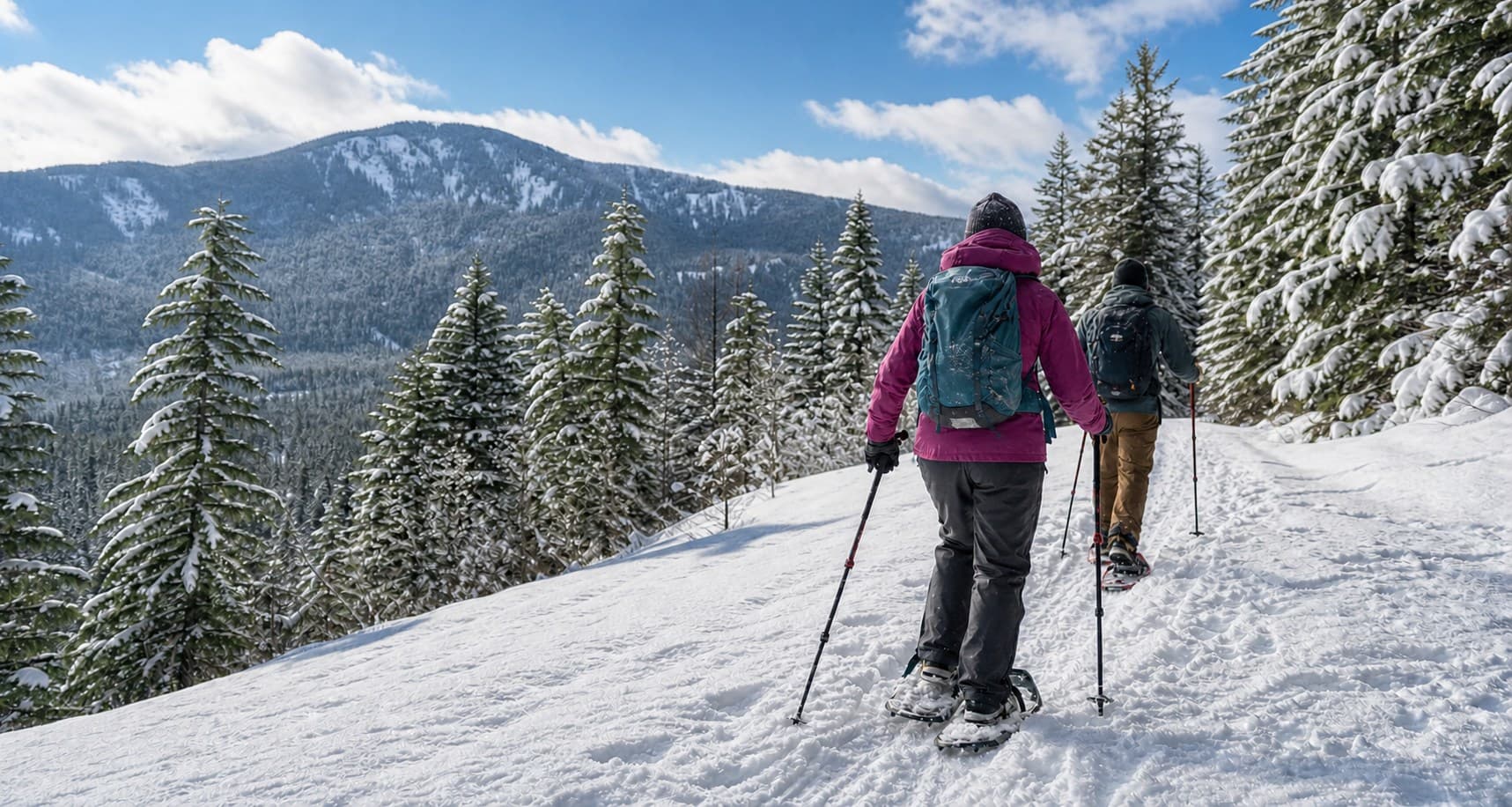
Layering and footwear
Build warmth in adjustable layers and choose footwear that matches the activity, expected temperatures, and time spent standing still.

Winter Sports equipment
Choose equipment around temperature, moisture, snow conditions, terrain, and activity level—then compare verified options by checklist need and price tier.
Winter equipment should help you stay dry and warm, provide secure footing, and leave room for changing conditions.
Build warmth in adjustable layers and choose footwear that matches the activity, expected temperatures, and time spent standing still.
Prioritize secure bindings, reliable traction, and compatible ski or snowshoe equipment before paying for lighter or more specialized materials.
Basic accessories are usually enough for short outings in managed areas. Remote or variable terrain requires a larger safety margin.
Winter Sports
93 verified direct-product links. Open the winter sports checklist →
Snowshoes selected for terrain, conditions, and loaded weight.
Classic, touring, and skate ski sets matched to groomed or mixed terrain and compatible boots.
Moisture management, insulation, and weather protection as a system.
Traction selected for the surface without overstating terrain safety.
Adjustable support with baskets appropriate to snow depth.
UV, wind, and snow-glare protection for the selected activity.
Waterproof warmth, fit, and snow traction matched to the activity and expected exposure.
Snowtrekker II Boot is a practical budget starting point for occasional snow play and maintained winter routes.
Why it leads: strongest balance of documented evidence, strong category-specific assessments, and value among these verified budget options.
Best for: occasional snow play and maintained winter routes
Revel IV Mid Polar Waterproof Boot is a practical standard starting point for regular winter hiking with a roomy forefoot.
Why it leads: strongest balance of documented evidence, documented practical fit and tradeoffs, and value among these verified standard options.
Best for: regular winter hiking with a roomy forefoot
Arctic 600 Side-Zip 200G is a practical premium starting point for frequent winter hiking where waterproof protection, 200-gram insulation, and winter-specific grip matter.
Why it leads: strongest balance of documented evidence, documented practical fit and tradeoffs, and value among these verified premium options.
Best for: frequent winter hiking where waterproof protection, 200-gram insulation, and winter-specific grip matter
Thermo Chill 2 Mid Waterproof is a practical budget starting point for winter hiking with moderate cold and a lighter boot preference.
Best for: winter hiking with moderate cold and a lighter boot preference
Toundra Pro ClimaSalomon Waterproof is a practical standard starting point for cold winter hiking where low bulk and protective warmth matter.
Best for: cold winter hiking where low bulk and protective warmth matter
Impact Boot is a practical premium starting point for low-to-moderate activity during prolonged extreme cold.
Best for: low-to-moderate activity during prolonged extreme cold
Bugaboot III Boot is a practical budget starting point for occasional wet snow, slush, and campground winter use.
Best for: occasional wet snow, slush, and campground winter use
Bridger 10-Inch Insulated Waterproof is a practical standard starting point for deep snow and colder outings needing a tall supportive boot.
Best for: deep snow and colder outings needing a tall supportive boot
Snow Monster Boot is a practical premium starting point for frequent snowshoeing and sustained severe winter conditions.
Best for: frequent snowshoeing and sustained severe winter conditions
Certified ski and snowboard helmets selected for secure fit and goggle compatibility.
Navigation, light, first aid, and backup warmth for delays.
Roadside equipment matched to access roads and requirements.
Next step
Choose an area and dates to connect gear with weather, stays, and the rest of your preparation.